




cw: corporal punishment, suicide
Throughout history, Care Experienced people have been overrepresented within the prison system, often due to overcriminalisation of behaviour or failure to support young people with disabilities in the community.
In 2024, Scotland passed the Children (Care and Justice) (Scotland) Act, which stopped any young people under eighteen from being placed in Young Offenders Institutions (YOIs). Four secure centres currently operate across Scotland today and children and young people can be placed there on offence grounds or for their own protection and safety. In 2023-24, an average of 60 young people were kept in secure care, and 37% were recorded as having a disability. The Scottish Government is currently consulting on plans to improve Secure Care and meet more children and young people’s needs within their communities.
In this article for Care Experienced History Month, Dr Andrew Kendrick explores the evolution of YOIs from Borstals and detention centres.
Over many years, there has been an overlap in children’s and young people’s experience of the care and prison systems in Scotland. When prisons were first opened in Scotland in the late 18th century, young children were locked up alongside adult prisoners. From early days, however, it was felt that children and young people should not be imprisoned with adults. Over the years, a range of alternatives to imprisonment have been developed.
Some of these developments were part of the child welfare system, run by charitable organisations and, later, by local authorities. These included reformatory and industrial schools, approved schools, remand homes and secure care services. The first secure care unit opened in the 1960s and children and young people continue to be locked up in secure care.
Another set of institutions for child and young offenders were developed as part of the Scottish prison system, and the purpose of such penal institutions has varied over time in terms of punishment, deterrence or rehabilitation. This article will outline the development of borstal institutions, detention centres, remand institutions and young offenders institutions in Scotland. Many care experienced children and young people were sentenced to these institutions, and many have been imprisoned in adult prisons [i].
From the late 18th century, children as young as six could be imprisoned alongside adult offenders in Scottish prisons[ii]. The prisons were notorious for their appalling physical conditions and corrupt administration, and children and young people in prison were subject to harsh discipline and punishment such as solitary confinement, being shackled in irons or locked in dark punishment cells. The first alternatives to prison, refuges, reformatory schools and industrial schools led to a fall in the numbers of children and young people in prison, but imprisonment was not eradicated.
At the end of the 19th century, concerns about the state of prisons and the condition of prisoners led to a major inquiry – the Gladstone Committee. It looked at the general condition of prisons and prisoners and also considered the situation of juvenile and first offenders. The Gladstone Committee made recommendations to reduce the number of young prisoners in adult prisons, and one of these recommendations was for a penal reformatory, which would be a half-way house between a prison and a reformatory school[iii]. The experiment to develop such a penal reformatory at Borstal Prison in Rochester, gave its name to the new borstal system, which was formally established by the Prevention of Crime Act 1908. Borstals were to provide young offenders aged 16 to 21 years of age with industrial training and instruction and disciplinary and moral influence to prevent reoffending.
In Scotland, Polmont Borstal Institution for boys opened in December 1911, in the former Blairlodge Academy. Jessiefield Borstal Institution for girls, a part of Dumfries Prison, opened in February 1912[iv]. Further borstals opened in the following years, though these were part of adult prisons, such as Barlinnie Prison in Glasgow and Saughton Prison in Edinburgh. After the Second World War, a new type of open borstal was established. Cornton Vale Open Borstal opened in 1946, Castle Huntly in 1947 and Noranside in 1963. These institutions ran with minimum security and the boys worked on farms and in factories.
In the 1930s, the Cadogan Committee was set up to consider corporal punishment in the penal system in the UK, including the birching of juvenile offenders. The Committee recommended that birching should be stopped, but before this could happen, the Second World War broke out. This turned out to have important implications for the development of penal institutions. During the Second World War, there were increasing concerns about juvenile delinquency because war conditions saw the breakdown of the family, with the absence of fathers on war service, and women conscripted to war work[v].
In 1949, legislation was taken forward to ban the birch. However, the ongoing concerns about juvenile delinquency led to calls for a punitive alternative. The 1949 legislation, then, provided for the establishment of detention centres to provide a ‘short, sharp, shock’ for young offenders who were thought to need a short period under strict discipline[vi]. It took until 1960, however, for the first detention centre to be opened in South Inch House, Perth; the former ‘criminal lunatic department’ of Perth Prison. South Inch was soon full, and Friarton Detention Centre opened in 1963. However, the building and then expansion of Glenochil Detention Centre led to the redesignation of South Inch and Friarton. The regime of the detention centres focused on military drills, physical training, cleanliness and tidiness, and strict routines.
The 1949 legislation also allowed for the establishment of remand centres as part of the prison system, in a further attempt to keep untried children and young people out of adult prisons. In the event, the remand institutions that opened in the 1960s – Longriggend Remand Institution and Polmont Remand Unit – appear to have been run as annexes to Barlinnie Prison. Polmont Remand Unit closed in 1968 but Longriggend Remand Institution remained open until 2000.
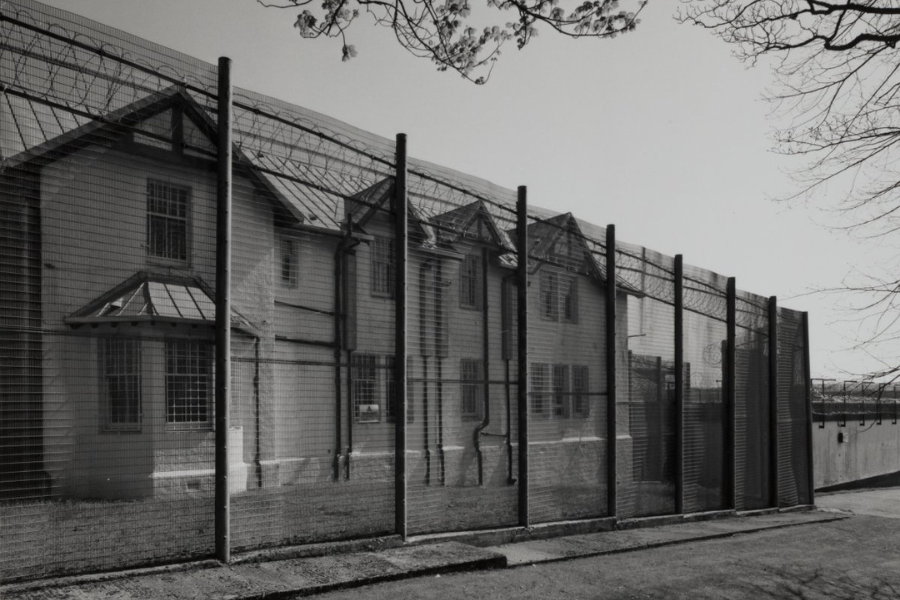
In the early 1960s, it was felt that a new type of penal institution was needed, somewhere between a borstal and a detention centre. Legislation in 1963 gave the court the power to impose detention in a young offenders institution if it was considered that neither borstal training nor detention centre discipline was appropriate. Young offenders institutions would provide suitable training and instruction.
Part of Saughton Prison and part of Greenock Prison opened in January 1965, for male and female young offenders respectively[vii]. In March 1965, Dumfries Prison was converted to a young offenders institution. By 1970, there were five young offenders institutions, four of which were part of adult prisons. The fifth was Friarton Young Offenders Institution, which had previously operated as a detention centre and a borstal[viii].
From the 1940s through to the 1980s, then, there was a confusing picture as these different types of institutions for children and young people were developed. There was criticism that the differences between borstals, detention centres and young offenders institutions ‘were not significant, the distinctions in respect of offenders arbitrary and the cost of operating three separate systems utterly disproportionate to the apparent benefits’ [ix].
To add to the confusion, establishments were redesignated as a different type of institution. Friarton Detention Centre opened in 1963, became a borstal in 1967, a young offenders institution in 1970, and was recategorised as a detention centre between 1984 and 1986. It closed as an establishment for young offenders and became part of Perth Prison, only to accommodate young offenders again in the late-2000s. Establishments could also contain two types of institution and Glenochil incorporated both a detention centre and a young offenders institution. There were also long standing criticisms of the fact that some borstals and young offenders institutions that were supposed to remove children and young people from adult prisons, were themselves located in adult prisons.
The 1980s saw the demise of borstals and detention centres. Borstal institutions became young offender institutions in 1983 and Glenochil Detention Centre closed and became part of Glenochil Young Offenders Institution in 1988. With the closure of Longriggend Remand Institution in 2000, young offenders institutions were the sole penal institutions specifically for children and young people.
Throughout this time, some children and young people were detained in adult prisons. In 1908, the Children Act prohibited the placement of children and young people in prison, except in very specific circumstances. Prison should be avoided unless the court considered that children aged fourteen years and over were so ‘unruly a character’ or ‘so depraved a character’ that this was not possible. Many children and young people were placed in adult prisons on ‘unruly certificates’. When Longriggend Remand Institution opened, it became the main placement for young men on ‘unruly certificates’. Others, however, continued to be placed in adult prisons until this sentence ended in 2010.
Children and young people were also placed in adult prison because of lack of places in other parts of the penal system. When detention centres opened in 1965, the sentence was so popular that the centres were quickly filled and a large number of young offenders was held in prison awaiting for spaces to become available.x In 2009, HM Inspectorate of Prisons reported on young offenders held in Perth Prison, Greenock Prison and Cornton Vale Prison, and raised serious concerns about the conditions for young women in Cornton Vale.[xi]
Unlike child care establishments, corporal punishment was not allowed in penal institutions in Scotland. Early prison rules, however, set out a wide range of punishments, including: isolation from other prisoners, deprival of work, hard labour, reduction of diet, confinement in a punishment cell, sleeping on a wooden guard-bed, restraint of limbs, and forfeiture of marks, gratuities or privileges. Over time, there has been a clear trend in reducing the severity of punishments. Some punishments were dropped altogether, such as reduction of diet, hard labour, and isolation and solitary confinement. Punishments became focused on loss of privileges and forfeiture of entitlements.
Accounts of the experience of children and young people in borstals, detention centres, young offenders institutions and remand institutions frequently describe brutal, disciplinarian regimes. Violence and intimidation were commonly used to enforce petty rules and regulations. Children and young people could be locked in their cells for up to 23 hours because of lack of opportunities and resources. Not all accounts were so negative, however, and the open borstals, for example, did not receive the same level of criticism.[xii]
Over recent years, there was increasing pressure to stop the imprisonment of under-18s in Scotland[xiii]. This was given additional impetus by the suicide of young offenders in Polmont, particularly those of Katie Allan and William Lindsay[xiv]. Finally, Scotland ended the locking up of children in prisons or penal establishments in September 2024, with the passing of the Children (Care and Justice) (Scotland) Act 2024. The dark history of children locked up in prison drew to a close.
Read more of our Care Experienced History Month resources here.
References:
i Kendrick, A. (forthcoming) Discipline and Punishment in Penal Institutions for Children and Young People in Scotland: Legislation, Regulations and Practice. Edinburgh: Redress Scotland.
ii Collin, M.C.Y.C. (1992) The Treatment of Delinquent and Potentially Delinquent Children and Young Persons in Scotland from 1866 to 1937. University of Strathclyde: PhD thesis, 10.
iii Departmental Committee on Prisons (1895) Report from the Departmental Committee on Prisons. [The Gladstone Report]. London: Her Majesty’s Stationery Office, 30.
iv Scottish Home Department (1947) The Scottish Borstal System: Report by the Scottish Advisory Council on the Treatment and Rehabilitation of Offenders. Edinburgh: His Majesty’s Stationery Office, 5-6.
v Smith, D. (2007) Official responses to juvenile delinquency in Scotland during the Second World War. Twentieth Century British History, 18(1), 78–105.
vi Wilson, R. (1970) Scottish Detention Centre Inmates: A Criminological and Psychological Assessment. University of Edinburgh: Master of Laws dissertation, 16.
vii Scottish Home and Health Department (1966) Prisons in Scotland: Report for 1965, Edinburgh: Her Majesty’s Stationery Office, 43.
viii Scottish Home and Health Department (1971) Prisons in Scotland: Report for 1970. Edinburgh: Her Majesty’s Stationery Office, 25.
ix Thomson, D. (2013) Prisons, Prisoners and Parole, 2nd edition. Edinburgh: W. Green, 52.
xi H.M. Inspectorate of Prisons (2009), Report on Young Offenders in Adult Establishments. Edinburgh: HM Inspectorate of Prisons, 3.
xii Kendrick (forthcoming). Discipline and Punishment in Penal Institutions
xiii Dyer, F. (2025) Reimagining custody for children in Scotland. Prison Service Journal 278, 34-40.
xiv O’Donnell, E. (2025) Self-harm and suicide in residential childcare. Scottish Journal of Residential Child Care 24(2), 47-71